
Was Saturn the Sun in ancient times? Or seen in history and mythology skies as a Sun like object?
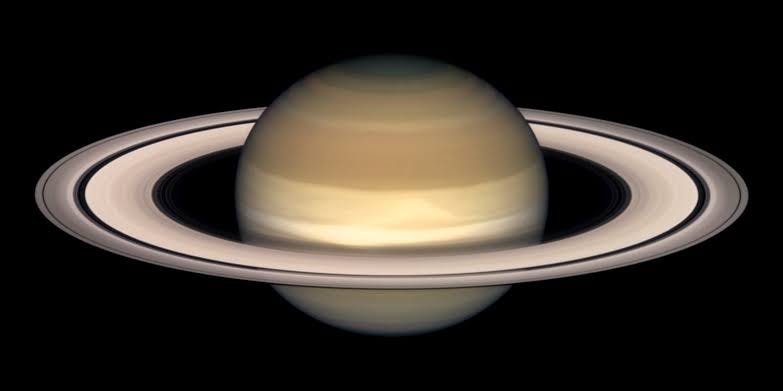
The Saturn Theory, comparative mythology and the Thunderbolts Electric Universe theory suggest that Saturn may have been our first Sun or was at least associated as a Sun. The Sun and Saturn are two very different celestial objects. Yet the Babylonians appeared to ‘confuse’ the two… or was it just the translators of the Babylonian texts? Thompson in his introduction to his collection of astrological reports has noticed that the planet Saturn was also designated as Šamaš, i.e. “sun” by the Babylonian-Assyrian astrologers and he quotes the statement of Hyginus to the effect that Saturn was called the star of the sun.
Saturn was named after the Roman god of agriculture and harvest. While the planet may have gotten its name from its golden color, like a field of wheat, it also had to do with its position in the sky. According to mythology, the god Saturn stole the position of king of the gods from his father Uranus. The throne was then stolen by Jupiter.
Was historic Saturn known as Sol, Kronos, the original Sun, Helios, Quetzalcoatl, Huracan, Ra etc?
Or should those identities be attributed to another planet(s), plasma events or the actual Sun in our skies?
Was Saturn a brown dwarf star where planet Earth resided during the Golden Age? Perhaps during the Saturn Polar Configuration?
The profile of the great “sun” gods presents a fascinating dilemma. During the past century several authorities noticed that Greek and Latin astronomical texts show a mysterious confusion of the “Sun” — Greek Helios, Latin Sol — with the outermost planet, Saturn. Though the designation seems bizarre, the expression star of Helios or star of Sol was applied to Saturn! Of the Babylonian star-worshippers the chronicler Diodorus writes: “To the one we call Saturn they give a special name, ‘Sun-Star’”.
Similarly, the Greek historian Nonnus gives Kronos as the Arab name of the “sun,” though Kronos meant only Saturn and no other celestial body. Hyginus, in listing the planets, names first Jupiter, then the planet of Sol, others say of Saturn. A Greek ostrakon, cited by the eminent classicist, Franz Boll, identifies the Egyptian sun god Ra, not with our sun, but with the planet Saturn. This repeated confusion of the Sun and Saturn seems to make no sense at all. Can you imagine any difficulty in separating the two bodies, or distinguishing the one from the other?
One fact beyond dispute is that the word Helios did become the Greek word for our Sun, just as the Latin Sol gave his name to our Sun. The same can be said for the older Shamash and Ra: the names of these gods became the names for the solar orb. But that’s where the connection with our Sun ends and the mystery of Saturn, the Universal Monarch, begins.
This would be possible if our cosmology was based on electromagnetic plasmas, our Sun and stars are electric and other EU theory models and predictions.
As strange as it may seem, early astronomical traditions identify the primeval sun as the planet Saturn, the distant planet which the alchemists called the best sun and which the Babylonians, the founders of astronomy, identified as the exemplary light of heaven, the “sun”-god Shamash. (Shamash is the planet Saturn, the astronomical texts say). In archaic copies of Plato’s Timaeus, the word for the planet Saturn is Helios, the “sun” god. Popular Greek traditions identified Saturn as Kronos, alter ego of Helios, and Kronos is said to have ruled over the pole. But only a handful of scholars have bothered to trace the parallel referents in other cultures, or to address the unanswered questions.
The Popol Vuh, lauded as the Mayan Bible, attests to the same idea. There a previous sun god is described as follows:
Like a man was the sun when it showed itself… It showed itself when it was born and remained fixed in the sky like a mirror. Certainly it was not the same sun which we see, it is said in their old tales
A golden race of mortal men who lived in the time of Kronos when he was reigning in heaven. And they lived like gods without sorrow of heart, remote and free from toil: miserable age rested not on them.
Peoples that remembered early tragedies enacted in the sky by the heavenly bodies asserted that Jupiter drove Saturn away from its place in the sky. Before Jupiter (Zeus) became the chief god, Saturn (Kronos) occupied the celestial throne. In all ancient religions the dominion passes from Saturn to Jupiter. In Greek mythology, Kronos is presented as the father and Zeus as his son who dethrones him. Kronos devours some of his children. After this act Zeus overpowers his father, puts him in chains, and drives him from his royal station in the sky. In Egyptian folklore or religion the participants of the drama are said to be Osiris-Saturn, brother and husband of Isis-Jupiter.
Here is a remarkable fact: though numerous figures of the Universal Monarch are translated conventionally as the “sun” god, the celestial power invoked by the world’s first religions is not the body we call [the] sun today. In fact the star-worshippers specifically distinguished it from our Sun by calling it best sun, the primeval sun, the central sun.
Natives of Mexico recall that prior to the present age, an exemplary sun ruled the world, but this was not the sun of today. His name was Quetzalcoatl. The Maya maintained essentially the same idea, calling the primeval sun god Huracan. The Incas of Peru spoke of a former sun superior to the present sun. To the ancient Egyptians, the sun god Atum-Ra, the model ruler, reigned over the fortunate era for a time, then retired from the world. The Sumerian An, ruling with “terrifying splendor,” was the central luminary of the sky, but not our sun, and later departed to a more remote domain.
When it comes to the well-known sun gods of early man, nothing in the mythical record seems to have unnerved the experts. As to the original solar character of the Greek Helios, Latin Sol, Assyrian Shamash, or Egyptian Ra, scholars have maintained an unwavering confidence. And surely you can see why: could it really be doubted that Helios, radiating light from his brow, is our sun?
Saturn did not move on its present remote orbit, but ruled as the central sun around which the other heavenly bodies visually revolved.
The words used by ancient civilizations that are interpreted today as “the Sun” — like the Egyptian Ra, the Greek Helios, and the Roman Sol — all originally referred to the gas giant Saturn! Was that planet our primordial parent? Was Saturn until recently a much larger brown dwarf? (The apparent size and color of an electric star is an electrical phenomenon. If Jupiter’s magnetosphere were lit up it would appear the size of the full Moon). Was ancient man around to see it as a sun? If not, why would anyone call a faint yellowish speck in the night sky — the Sun?
Chronos was confused with, or perhaps consciously identified with, due to the similarity in name, the Titan Cronus already in antiquity, the identification becoming more widespread during the Renaissance, giving rise to the allegory of Father Time wielding the harvesting scythe. He was depicted in Greco-Roman mosaics as a man turning the Zodiac Wheel. Chronos, however, might also be contrasted with the deity Aion as Eternal Time. Chronos is usually portrayed through an old, wise man with a long, grey beard, such as “Father Time”.
In Greek mythology, Chronos in pre-Socratic philosophical works is said to be the personification of time. He emerged from the primordial Chaos. He is often mythologically confused with the Titan Cronus. He was depicted in Greco-Roman mosaics as a man turning the zodiac wheel. Often the figure is named Aeon (Eternal Time), a common alternate name for the god. His name actually means “Time”, and is alternatively spelled Khronos (transliteration of the Greek), Chronos, Chronus (Latin version).
And interestingly, the Cheonjiwang Bonpuri (Chronicles of Cheonjiwang) is a Korean creation myth, traditionally retold by shamans on the small island of Jejudo … Despite its title, the supreme deity Cheonjiwang, whose name means “King of the Heavens and the Earth”, serves mainly as a secondary character… The protagonists of the myth are instead the two sons of Cheonjiwang, Great Star and Small Star.

Now, even though Velikovsky points out that Saturn was once a much more massive body than it is today, it is hard to imagine that it could have been massive enough to be a star in the context of the thermonuclear theory of stellar energy. If, however, it was an electrically fuelled star, its initial stellar state and its sudden demise seem readily explainable.
In fact it may well be that both Jupiter and Saturn were at one time minor stars and that their satellite systems were formed as the result of minor or planetary nova outbursts.
In the language of myth, In the earliest age recalled by man the planet Saturn was the dominant celestial body. Accounts of Saturn’s appearance suggest that the planet hung ominously close to the earth. The modern age has misread the ancient accounts of “the beginning.” These accounts speak of a creator, a first man, and a first king — all referring to the same cosmic figure. The legendary creator, first man, and first king was Saturn. Massive quantities of cosmic debris exploded from Saturn, clouding the heavens and eventually congealing into a vast band around the planet. The ancients drew pictures of Saturn incessantly, and these pictures will be found around the world. Images of Saturn in his enclosure occur on every page of ancient texts. Receiving light from the solar orb, the Saturnian band acquired a brightly illuminated crescent, which, as the earth rotated on its axis, visually revolved around Saturn each day.


This knowledge of Saturn being our primordial sun has also been preserved in ancient African myths and creation legends creation such as the one told in this comic whereby the cosmic pillar/ The Baobab Tree of Life launches a mountain into the ancient cosmos to bring order to create the moon and bring order to the the Saturnian cosmos.


The Six Pointed Star
In the book The History and Practice of Magic, Volume 2, the six-pointed star is called the talisman of Saturn. The obverse side has the five pointed star, commonly called the pentagram; and the reverse side has the Seal of Solomon with the hexagram at its center. The hexagram is also known as the “King’s Star” in astrological circles, and was an important astrological symbol in Zoroastrianism. It was also used by the Druids during the highest Sabbath of occultists and witches, now called “Halloween.” The hexagram is also found in Arabian magic and witchcraft through the Middle Ages.
The Shield or Star of David is not mentioned in rabbinic literature at all. Notably, not a single ancient archeological proof exists as yet concerning the use of this symbol in the Holy Land in ancient times, even after King David.
The name “Star of David” originated in the 13th century in Kabbalah—the ancient Jewish tradition of mystical interpretation of the Bible—where it is a magic symbol associated with the pentagram. It is very commonly known that the pentagram is directly associated with witchcraft and occultism.
The star symbol continues down through the occult to the Jewish Mayer Amschel Bauer, who, in the 18th century, changed his name to depict the red six-pointed star (or shield) which he had hung on his door in Germany, and thus began the family of the “Red Shield” or Rothschild. Also, several Rothschild descendants have the star of David on their coat of arms. The were a Jewish family, but it is not a symbol of Judaism.
The Rothschilds were instrumental in raising up the Zionist Movement in 1896, in funding its activities, and then forcing the occultist leaders of Israel in 1948 to adopt the hexagram as their national symbol.
The “Star of David” was adopted by the First Zionist Congress (in 1897) as a symbol, and it is seen on the flags of the Zionist Organization and of the State of Israel.
There is no biblical evidence, whether Scriptural or archeological, that the so called ‘Star of David’ is a God-given symbol for the Israelites (or, more specifically, the Jews). The Israelite view of God under Moses, which permitted no images of God, was and still is, opposed to the acceptance of any symbols to represent God, and neither the Bible nor the Talmud condones them.
There is extensive evidence that the ‘Star of David’ originated in very ancient occult practices and continues to occupy a place in those practices today. Sadly, this practice is prevalent within Judaism and Christianity today. It is an interweaving of occult mysticism with the Holy Scriptures.
The so-called ‘Star of David’ is essentially a hexagram, nothing more, nothing less. There is no biblical, archaeological or Jewish evidence that traces this ancient occult symbol to king David of Israel.
Some Orthodox Jewish groups reject the use of the hexagram Shield of David because of its association with magic and the occult. They do not recognize it as a Jewish symbol.
If you examine the so-called ‘Star of David,’ or hexagram, closely, you discover something astonishing. It has six points, forms six equilateral triangles, and in its interior forms a six sided hexagon. Thus, it has been intentionally designed with a 666 message. God specifically warns against this kind of thing in His written word. Christians and Jews must not look to or dabble in the occult, not even for fun and entertainment.
The Oppenheimers were sponsored in the late nineteenth and early twentieth centuries by the Rothschilds family banking and finance group to mine the diamonds in Kimberly, South Africa. Ernest Oppenheimer was an early member of the Bavarian Illuminati, which had been founded using money from the Rothschild family.
How strange indeed that they would design the Star of Saturn into the streets of Kimberly:

Witches, magicians, mediums or sorcerers will not guide you in your walk with God, neither will “good luck charms” protect you. And we are certainly not to use their symbols as representative of God or His People.
If this is true of the Star of David, it raises the question of the origin of the “Christian” cross.
Please look at this fantastic breakdown or history of this truly ancient African symbol
The Blombos Cave Ochre
Blombos Cave is situated 50 m from the Indian Ocean, elevated at 35 m above sea level and 300 km east of Cape Town. It’s very small – just 55m². It was used as a temporary living site by hunter gatherer groups; they’d spend a week or two there at a time before moving on.

The archaeological layer in which the Blombos Ochre was discovered has also yielded other indicators of symbolic thinking.These include shell beads covered with ochre and, more importantly, pieces of ochres engraved with abstract patterns. Some of these engravings closely resemble the one drawn on the silcrete flake.

In older layers at Blombos Cave, dated at 100 000 years, they also discovered a complete toolkit consisting of two abalone shells filled with an ochre rich substance – a red paint – and all the artefacts associated with making it including seal bone used to add fat to the mixture. This discovery proves that our early ancestors could also make paint by 100 000 years ago.
Engraved ochre slabs with various designs, including cross-hatched patterns, were also found in these older layers.